
What to Consider When Choosing Electronic Components?
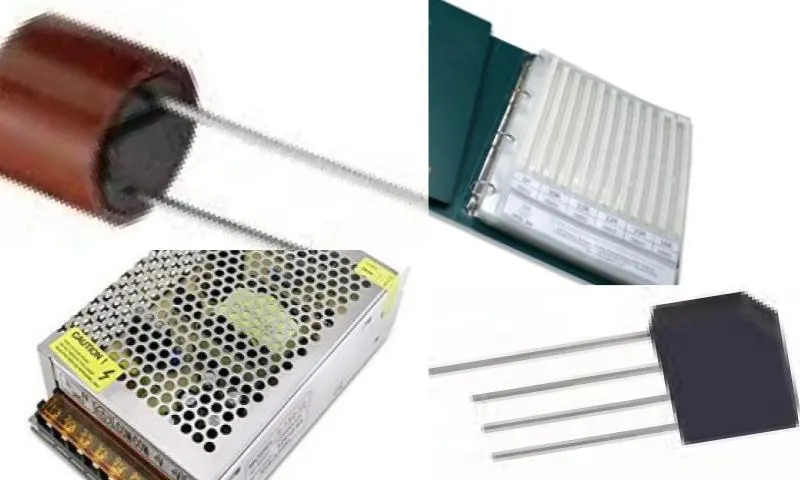
How Are Electronic Components Manufactured?
Choosing electronic components is critical for circuit design and performance. Selecting the right component can increase the device's efficiency and extend its lifespan. Each component has a specific function, and this function must be performed correctly. The role of the selected component in the circuit must be compatible with the fundamental requirements of the design. It is necessary to determine the voltage and current values at which the components will operate. The tolerances and power capacities of the components must be suitable for these criteria. There may be space constraints in circuit design. The dimensions and placement of the components must be compatible with the circuit's design. You can visit the web address for more detailed information about electronic components.
What is the Future of Electronic Components with Evolving Technologies?
The production of electronic components is a complex process involving many stages. The first step is the design of a specific component. Engineers determine the component's function, design, and specifications. CAD software and simulation tools are used at this stage. Electronic components are manufactured from various raw materials. Metal oxides are used for resistors, and aluminum electrodes for capacitors. These materials form the basis of the manufacturing process. Components are assembled by automated machines. These components, placed on the PCB (Printed Circuit Board), are placed and soldered in a specific order. The future of electronic components is undergoing significant changes as technology advances. New developments are enabling the production of smaller, more powerful, and more efficient components. Nanoscale components allow for the design of circuits that can perform faster and more efficiently. These technologies are revolutionizing critical areas, especially computer processors and memory units. Components made with flexible materials are suitable for new applications such as clothing or curved surfaces. This could be a significant step in the development of wearable technologies. The design and production of electronic components are becoming faster and more error-free by leveraging artificial intelligence and automation technologies.





