CO2 Fire Suppression System: Clean Intervention in Historical Documents and Data Banks
Characteristics of Areas Protected by CO2 Fire Suppression System
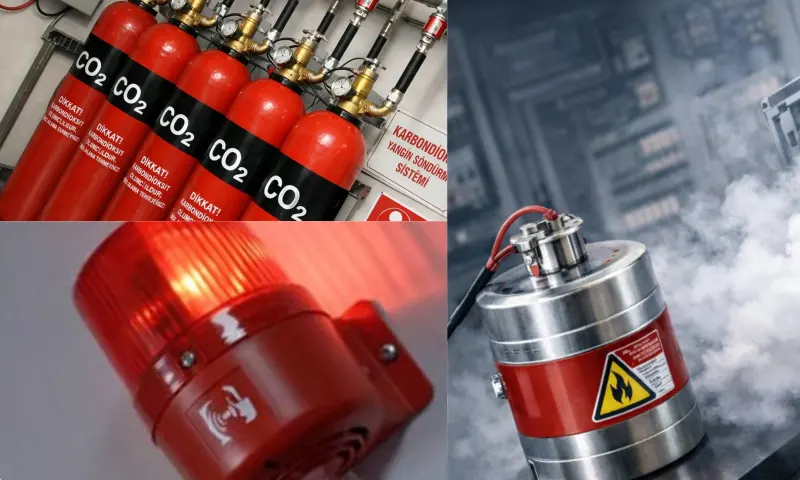
When a fire breaks out in an invaluable archive or a library where critical data is stored, the damage caused by water can sometimes be more destructive than the flames. As Ukaz Fire and Security Systems, we never recommend water or powder-based systems in areas where valuable documents and digital data are stored. Carbon dioxide, among our gas solutions accessible via https://ukazyangin.com/urun/karbondioksit-yangin-sondurme-sistemleri/, is one of the rare agents that can extinguish a fire without touching the objects. The CO2 fire suppression system completes its task in seconds without disturbing the humidity balance in the environment and without leaving any physical residue on the documents.
Room Sealing in CO2 Fire Suppression System Usage
These systems not only extinguish fires; they are also designed with the sensitivity to extend the life of valuable items in the environment.
- Does Not Harm the Ozone Layer: As it is a natural gas, it fully complies with environmental standards.
- Wide Application Area: It is the safest cleaning agent for printing houses, museum storage, and laboratories.
- Effective Evacuation: The gas itself is colorless and does not completely obscure vision during intervention, allowing for evacuation.
The success of a gaseous fire suppression system depends not only on the quality of the gas but also on how long that gas can remain in the room. If door bottoms, ventilation ducts, or cable passages are not sealed, the gas will escape and the oxygen level will rise again, triggering the fire. Therefore, measuring the room's gas retention capacity by performing a "Door Fan Test" after system installation is the most critical step in certifying the system's efficiency. In a professional approach, a system installed without sealing provides security only on paper. Security is not about considering the possibility of an accident, but about ensuring that life can continue from where it left off if that possibility occurs. Modern structures truly become "living" spaces only when equipped with the right technologies.