How to Provide First Aid for Airway Trauma?
If the act of inhaling or exhaling is completely or partially obstructed, the primary goal is to ensure breathing; because if air does not reach the lungs, the body's tissues will be damaged and die due to lack of oxygen.
In cases such as liquid or foreign objects entering the airway, the tongue falling back and blocking the airway during fainting as seen in diseases like epilepsy, and poisoning, the patient must receive first aid as soon as possible.
Following such trauma, if breathing is rapid, noisy, and strained, if there is foaming and blueness around the mouth, or blueness of the face and hands, or if consciousness is semi-alert or the person has fainted, it indicates difficulty in breathing. The cause of choking should be identified and, if possible, removed. The patient's consciousness should be checked, and medical support should be sought immediately.
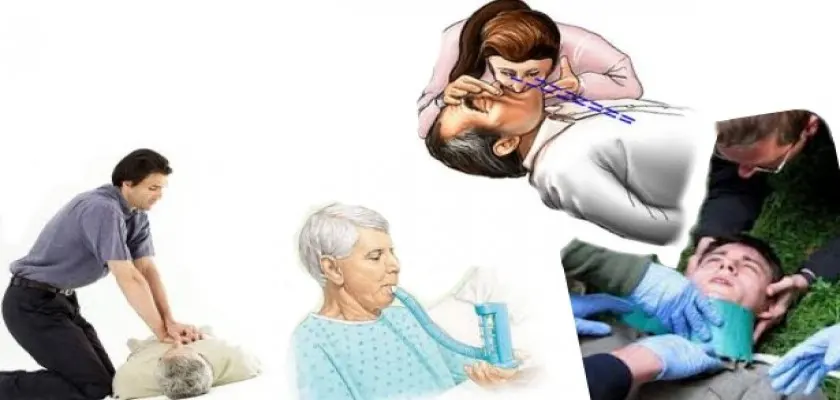
In case of liquid entering the airway, even if half an hour has passed since the incident, the victim should be given artificial respiration from mouth-to-nose or mouth-to-mouth, along with chest compressions.
In case of a foreign object entering the airway, the Heimlich maneuver is performed differently depending on whether the patient is conscious or unconscious.