
Finite Element Analysis
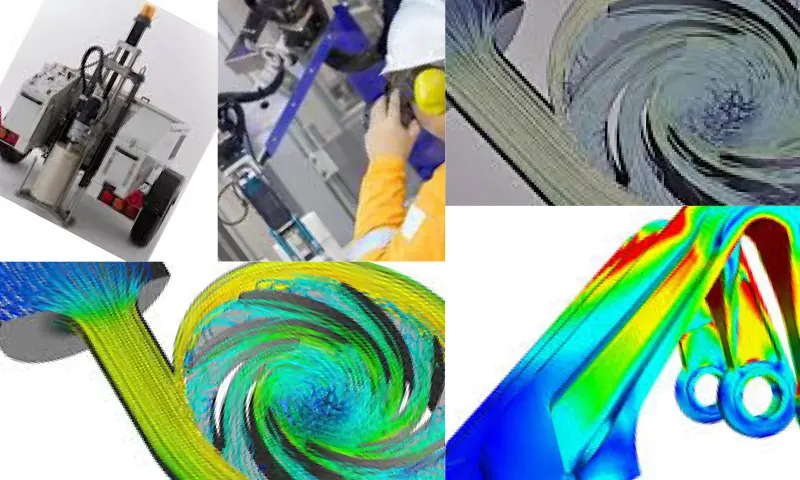
Applications of Finite Element Analysis
Finite Element Analysis is the simulation of any physical phenomenon using a numerical technique called the Finite Element Method (FEM). To create these equations, you can contact us through our website. Engineers use it to reduce the number of physical prototypes and experiments and to optimize components in the design stages to develop better products faster. Mathematics must be used to comprehensively understand and measure any physical phenomenon such as structural or fluid behavior, thermal transport, wave propagation, growth of biological cells, etc. However, numerical techniques have been developed over the past few decades for a computer to solve these PDEs, and one of the most prominent today is Finite Element Analysis. Differential equations can describe not only the processes of nature but also the physical phenomena encountered in engineering mechanics. These partial differential equations (PDEs) are complex equations that need to be solved to calculate the relevant quantities of a structure (stresses (ϵ), strains (ϵ), etc.) to predict the behavior of the component being studied.
What to know about Finite Element Analysis
It is important to know that finite element analyses only provide an approximate solution to the problem and are a numerical approach to obtain the true result of these partial differential equations. Simply put, finite element analysis is a numerical method used to predict how a part or assembly will behave under certain conditions. It serves as the basis for modern simulation software and helps engineers find weak points, stress fields, etc., in their designs. The results of a simulation based on the finite element analysis method are often displayed with a color scale, for example, showing the pressure distribution on the object.





