
Mehmet Akif Ersoy and His Services
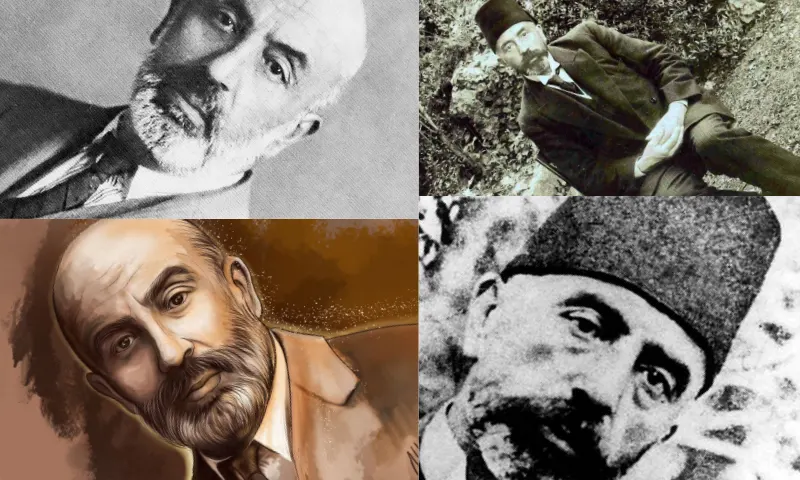
Mehmet Akif Ersoy is a great poet who dedicated a very large part of his life to Islam. Known by a large part of the country's people for being the author of the Independence March, Ersoy served Islam from the early 1900s onwards. It is known that Mehmet Akif worked in important institutions for Islam. Mehmet Akif Ersoy was active in institutions in Turkey, Egypt, and Lebanon for a significant part of his life and worked for the salvation of the homeland.
Was There Rebellion in Mehmet Akif Ersoy's Poems?
The reason for the emergence of the view that Mehmet Akif rebelled against God is the poem he wrote, 'Ya Rab Yok Mu Bu Gecenin Sabahı' (Oh Lord, Isn't There a Morning to This Night). An expression in one line of this poem reveals that Mehmet Akif was complaining to God. However, it is not possible to say he was an enemy of Islam based solely on this poem. Mehmet Akif Ersoy began to serve Islam in some institutions after becoming a member of the Committee of Union and Progress. Furthermore, during his time in Libya and Egypt, he was active in various institutions, trying to spread Islam. Ersoy might have defended Pan-Islamism, one of the salvation ideas that emerged in the late Ottoman period. This idea advocates for the union of all Islamic states under one roof. However, this idea was never implemented. Another way to understand that Mehmet Akif served Islam is his reaction to the Hat Law and the abolition of the Caliphate. This view was put forward by some circles in 1926. Mehmet Akif's permanent move to Egypt after losing his mother in 1926 facilitated the emergence of this view. However, Ersoy's son-in-law argued that he could not work properly due to his family and stated that this was why he went to Egypt. Regardless, Mehmet Akif served the homeland and devoted a very large part of his life to salvation.
Mehmet Akif's Childhood Years
Mehmet Akif Ersoy was born in December 1873 in the Sarı Güzel Neighborhood of the Fatih district of Istanbul. However, his population registration shows him as being from Çanakkale Bayramiç due to his father's role as an Imam in Çanakkale. Mehmet Akif also spent his early childhood years here. His mother was Emine Şerif Hanım, the daughter of an immigrant. His father was Tahir Efendi from İpek, of Albanian origin. Mehmet Akif's real name was Ragıf. However, as it was not a common name, his mother and friends called him Akif. Mehmet Akif spent a significant part of his childhood at his mother's house in Sarı Güzel with his younger sister Nuriye. Mehmet Akif Ersoy began his education at the Emir Buhari Neighborhood School at the age of 4. After learning Arabic in his primary school years, he transferred to Fatih Central Rüştiye in 1882. Mehmet Akif had a great interest in language studies throughout his life. For this reason, he learned Persian, French, and Arabic more easily. Akif's high school education took place at Mülkiye İdadisi. After high school, as Akif was about to start higher education, his father's death and a fire at their home caused his family to become impoverished. After these events, Mehmet Akif enrolled in the School of Agriculture and Veterinary Medicine. Here, Ersoy, who showed great interest in sports, started engaging in wrestling, swimming, and shot put. Ersoy, who began writing poetry in the last two years of school, graduated from the School of Veterinary Medicine with honors.





